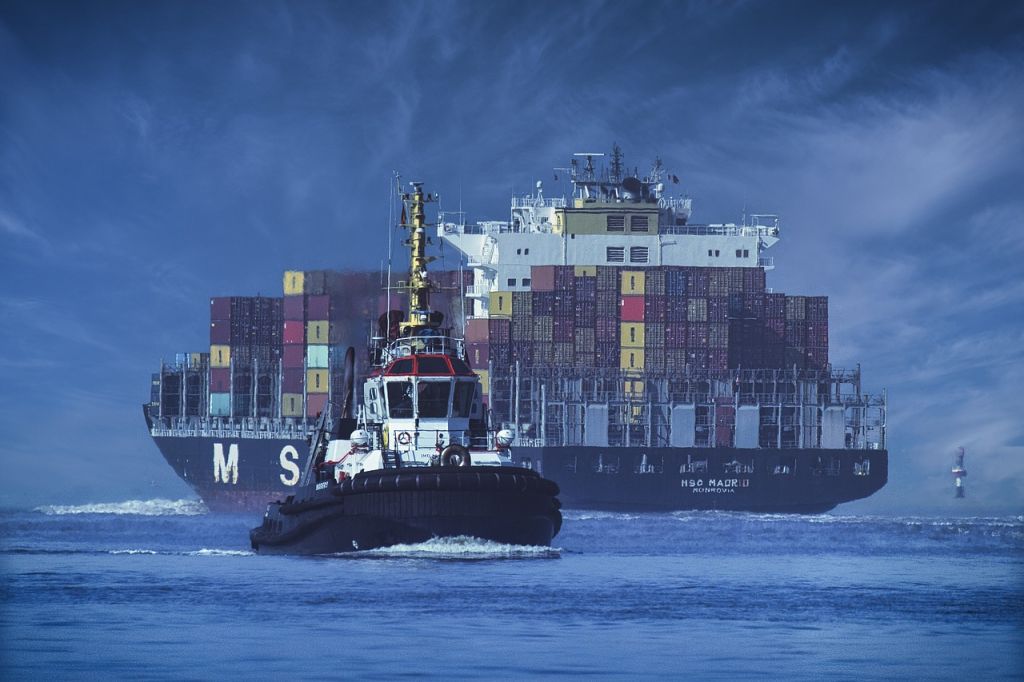
MSC joins forces with the Alliance on routes between Asia and Europe
THE Alliance, one of the three major shipping alliances formed in 2017, is set to disband. This follows several major changes in the shipping sector.
Firstly, Maersk and MSC have decided to end their vessel-sharing agreement within 2M in 2025. Secondly, Hapag-Lloyd, which will leave THE Alliance in January 2025, has joined forces with Maersk to form a new alliance called Gemini, which will commence in February 2025.
As a result of these developments, THE Alliance is reorganising. ONE, HMM and Yang Ming will continue their cooperation under the new name Premier Alliance, from February 2025 for a period of five years. MSC is joining THE Alliance and will charter slots on its Asia-Europe/Mediterranean services under the name Premier Alliance, thereby strengthening their offering and optimising container transport services on these strategic routes.
Hapag-Lloyd will be replaced within THE Alliance in January 2025 by MSC, which has also announced that it will be leaving the 2M Alliance at the end of 2024. However, the latter two will join forces within Gemini from February 2025.
These changes aim to offer a wider selection of reliable and flexible services, with improved global coverage, including more than 80 direct port calls. Nine weekly services will be offered, compared with the four currently provided by THE Alliance.
This service currently operates 260 vessels with a total capacity of 3.3 MEVP. Hapag-Lloyd accounts for 26.2 per cent of the alliance’s capacity, ONE for 38.7 per cent, Yang Ming for 17.6 per cent and HMM for 17.5 per cent.
The aim is to optimise container transport services on these strategic routes. The new tripartite alliance will benefit from the addition of MSC’s capacity to strengthen its more robust and diversified offering and improve the reliability and flexibility of services between Asia and Northern Europe.
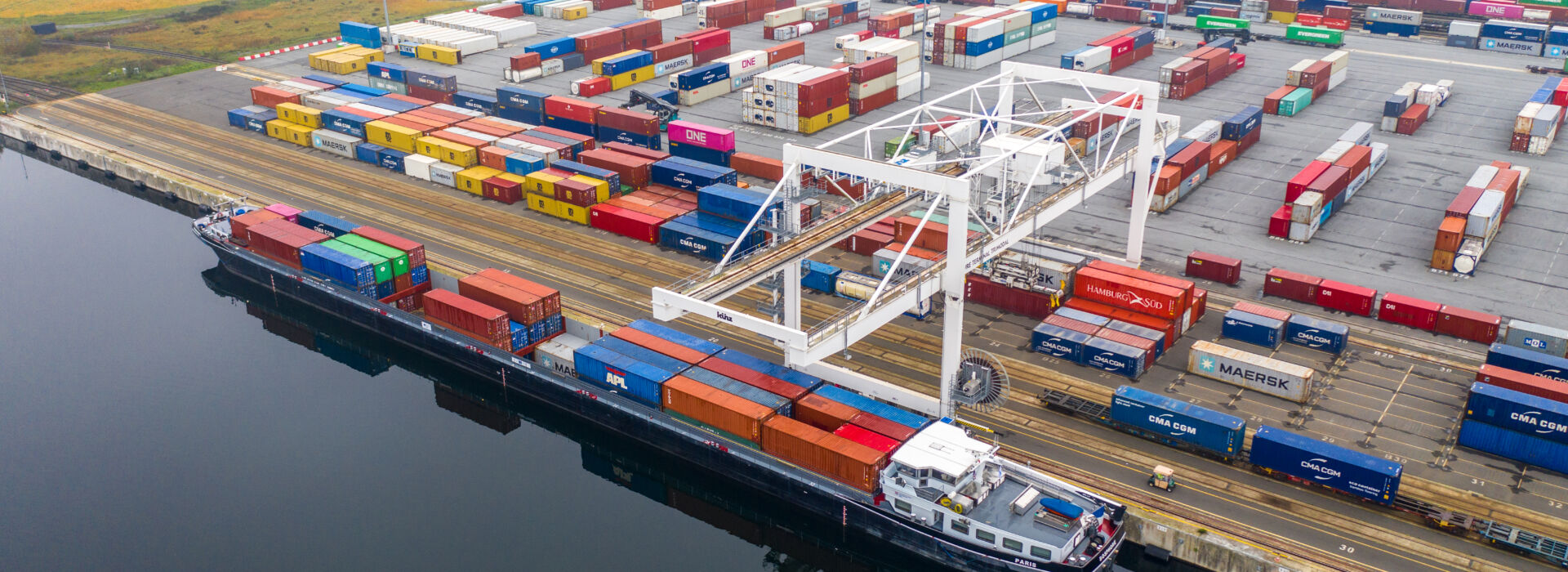
European ports, notably those of LE HAVRE and MARSEILLE-FOS, will benefit from this new arrangement in terms of service frequency and quality. Of the seven weekly Asia–Northern Europe services, four will call at Le Havre directly, including two as the final port of export and one as the first port of import.
MSC operates four loops to Northern Europe (M Lion, M Griffin, Sentosa-Swan and Britannia, which operate independently) and three to the Mediterranean (2M Jade, M Tiger and Dragon, which operate independently). Once the services have their full fleet in place, they will deploy the equivalent of 2.4 MEVP on the Asia–North America and Asia–Europe routes.
This is almost equivalent to the combined capacity of Maersk and Hapag-Lloyd (2.6 MEVP). On the North America route, MSC operates 11 of its own services and will call at LE HAVRE four times.
Experts predict that beyond 2025, MSC and Maersk will once again become independent, and that MSC is the only shipping line capable of operating independently, having absorbed nearly 1 MEVP since 2023 and acquired 383 container ships over the last four years. Furthermore, its order book is well-filled, with 130 vessels offering a capacity of 1.8 MEVP.
As for the world’s leading alliance, the Ocean Alliance (comprising CMA CGM, COSCO and its subsidiary OOCL, as well as Evergreen), it has been renewed until 2032. This represents 353 container ships and 4.62 MEVP. By 2027, it is set to expand further thanks to an order book of 2.38 MEVP.
Its market share is estimated at 37.2 per cent on the Europe–North America trade route.
Sources: Le Marin / JMM 10 September 2024