WELDER
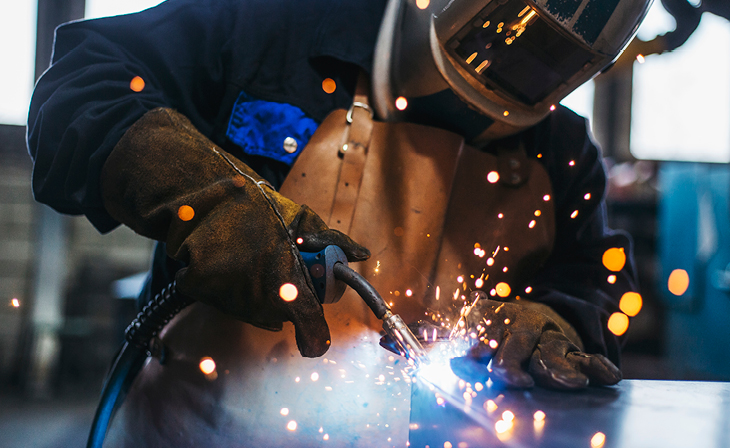
Using a blowtorch, a welder joins metal parts manufactured by others by fusion. They may specialise by sector, by process, by welding position, or by type of metal or component. They work in factories or on construction sites. They may work alone, or alongside a boilermaker, a pipeworker or a mechanic. The automotive industry traditionally employs a large number of them.
Qualities and skills
- Attention to detail, patience and dexterity
- Ability to work as part of a team
- Attention to detail
- Adaptability
- Use of specific metalworking techniques
- Use of welding techniques for assembling components of a metal assembly or sub-assembly
- Reading and analysing assembly drawings and diagrams
- Identifying appropriate materials and welding techniques (MIG, TIG, etc.)
- Adjusting the settings of welding machines and equipment
- Checking the quality of the welds carried out
- Knowledge and application of safety regulations
Levels of education and training
CAP in Metalworking / Industrial Fabrication in Boilermaking or Welding
Professional Qualification: Industrial Welder and Fitter / TIG Welder (coated electrode)
A-level equivalent: Vocational A-level in Industrial Metalwork
Sectors and companies
Welding work can be carried out in traditional industries (construction, automotive, steel, food processing, shipbuilding, etc.) as well as in more specialised sectors such as nuclear, aerospace or the oil industry. Today, welders work in an increasingly technology-driven environment, utilising robotic processes.
Source: LH PORT CENTER – Further information at www.lhportcenter.com